
Eszter Metzing (HU)
Eszter Metzing is a Hungarian visual artist who graduated in Graphic Design from the Hungarian University of Fine Arts in Budapest. Her artistic practice moves between graphic art, textiles, objects, and spatial installation. Since 2021, she has been represented by Inda Gallery in Budapest. She has exhibited in Hungary and internationally, including in Belgium, Austria, France, Slovakia, and Poland, and has participated in several international residency programmes, including in Graz, Salzburg, and at the Baltic Gallery of Contemporary Art in Poland. She is a member of the Studio of Young Artists’ Association (FKSE) and is part of the studio community at Art Quarter Budapest (aqb).

In her practice, Metzing explores the relationship between the body, memory, and material through the concepts of “skin consciousness” and material memory. She understands the skin as a permeable boundary that both separates and connects the human body with its surroundings, carrying traces of individual and collective memory. Her research draws on perspectives from somaesthetics, enactivism, and hydrofeminism, approaching the body not as an isolated entity, but as part of broader ecological and material networks.
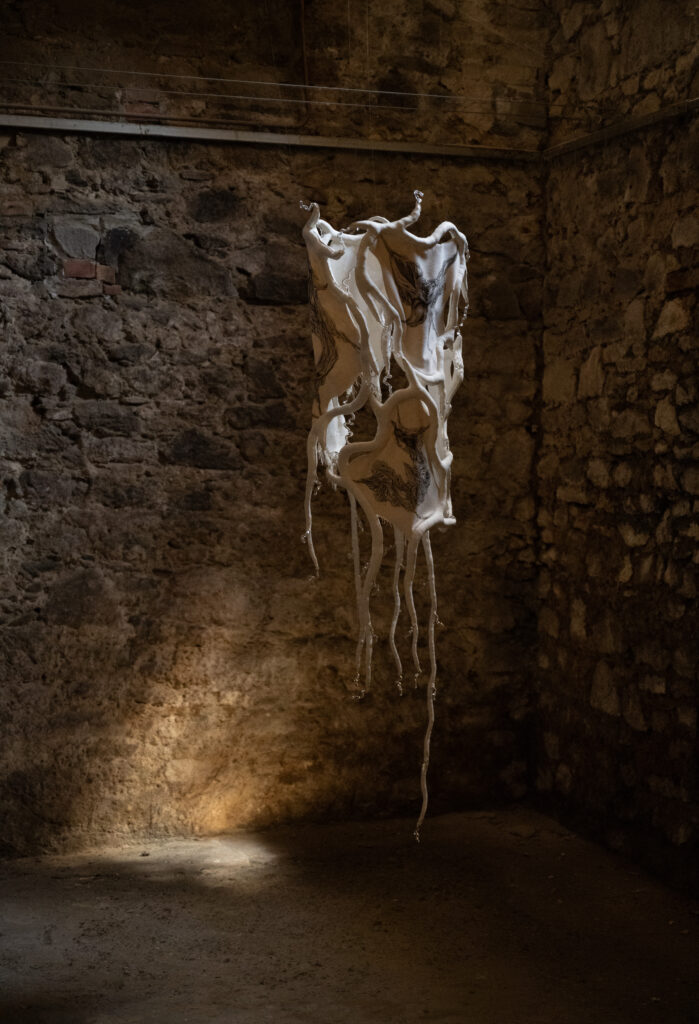
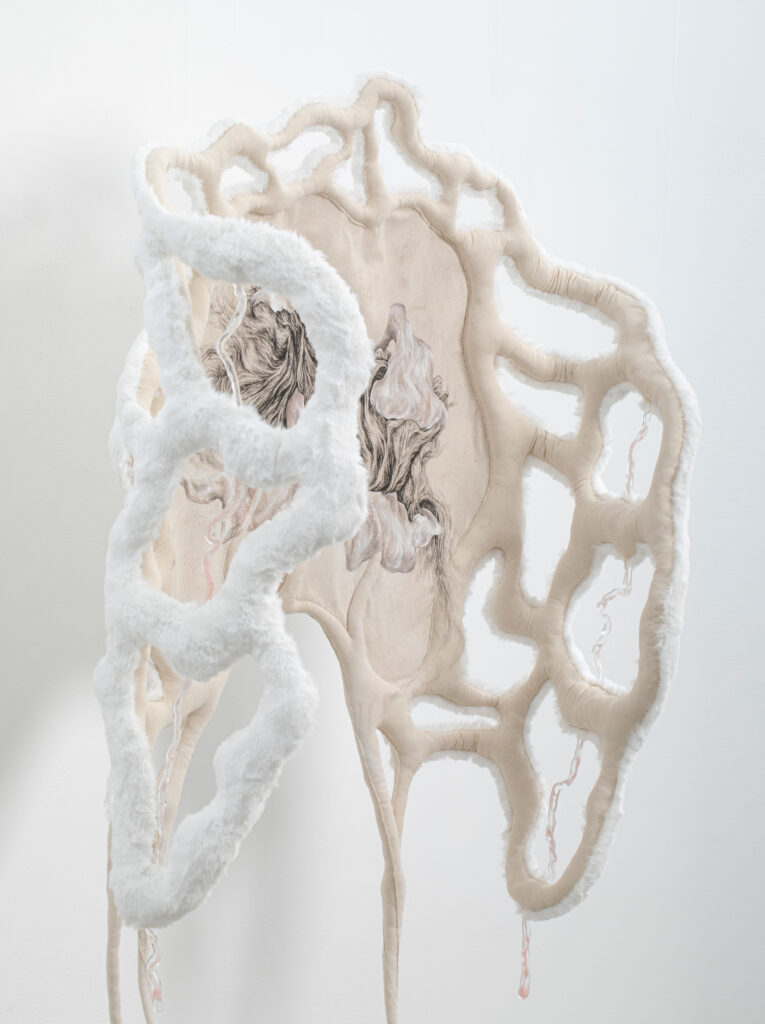
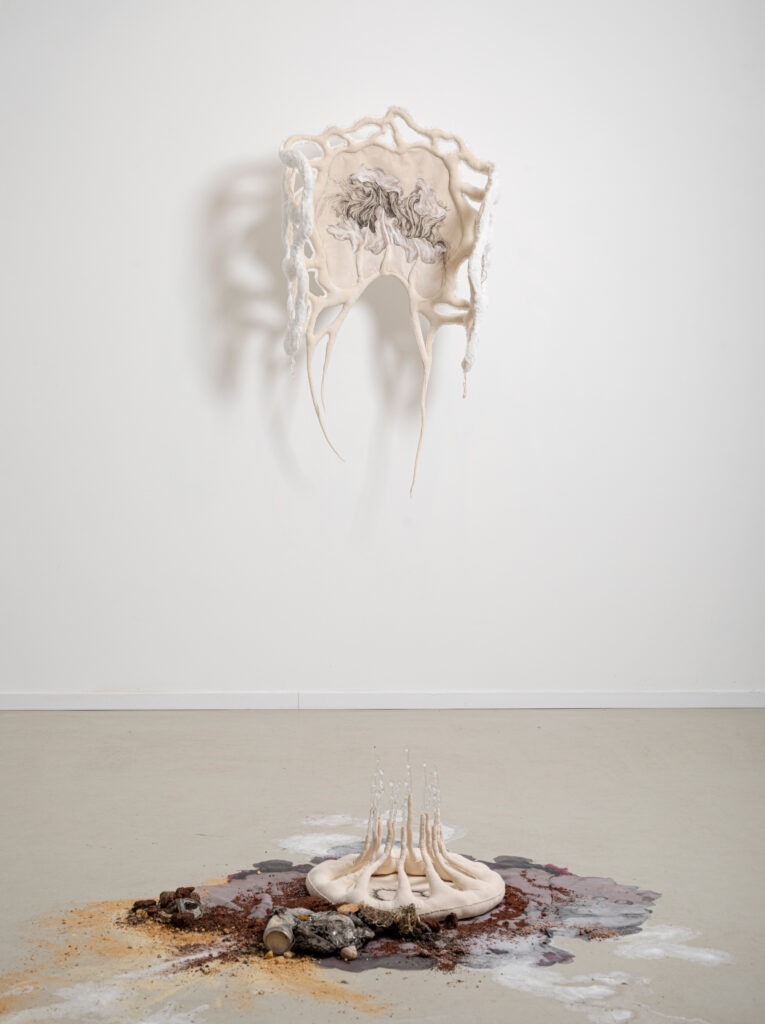
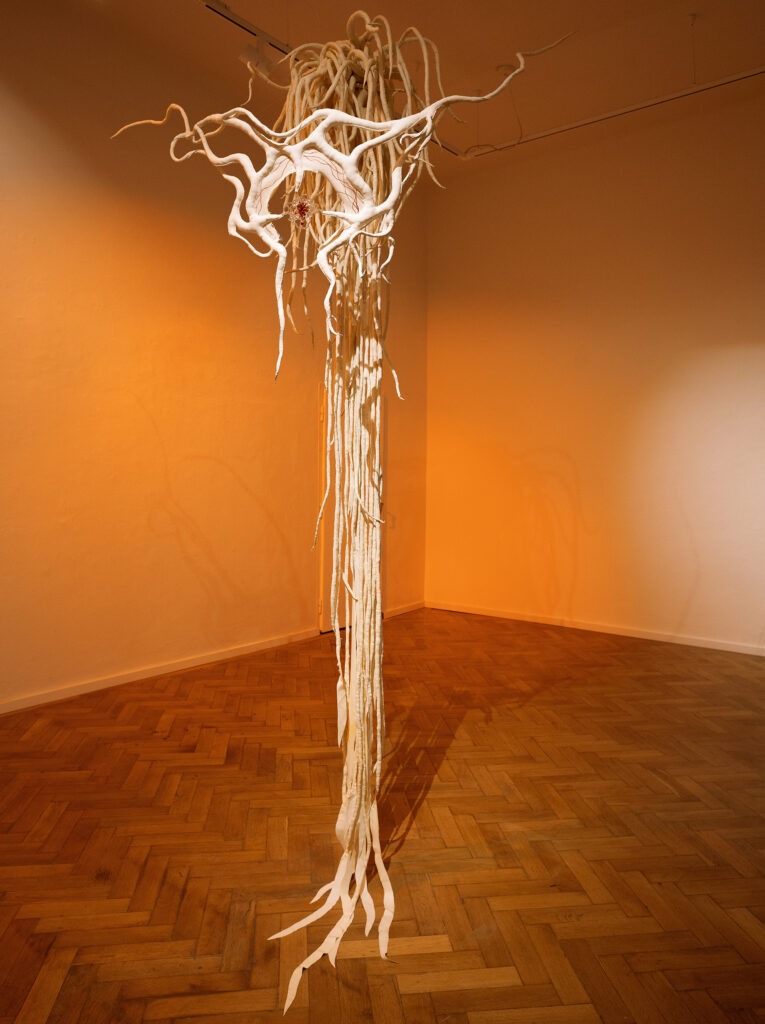
Working across graphic art, textiles, objects, and spatial installation, Metzing combines natural and industrial materials such as linen, latex, leather, and borosilicate glass to create immersive textile installations and soft sculptures. Through the layering of materials, structures, and tactile qualities, she examines vulnerability, transformation, and the interconnectedness of human and more-than-human worlds.
Water plays a significant role in her work as a medium that connects bodies, landscapes, and ecosystems, while personal memories of childhood and the landscapes she grew up in also serve as important sources of inspiration. Her works create sensory experiences that activate the viewer’s embodied perception and invite new ways of thinking about the relationship between humans, materials, and the environment.

The residency program was supported using public funds by the City of Košice and Creative Industry Košice.